
How do prop firms make money?
Reset charges, activation costs, profit splits, and evaluation fees bring in the money. How do prop firms make money? Put together, they explain the business behind it. Most retail customers pay for tests, monthly renewals, or add-ons, but never receive a payout.
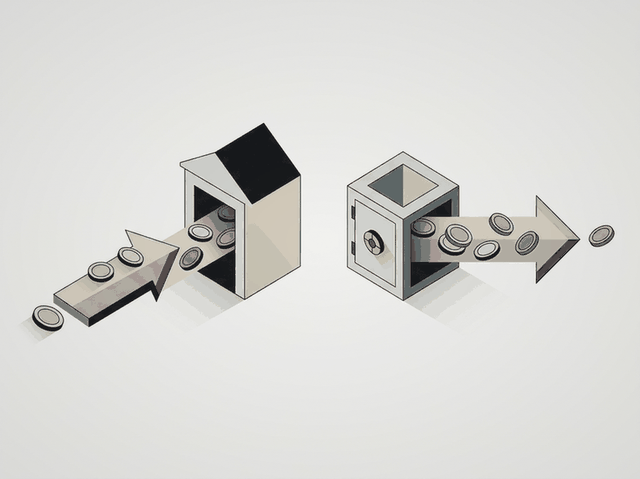
Retail funded account firms, compared with Wall Street desks
Salaries go out to the employees hired by a traditional trading desk. They trade with the company's own money, so a desk earns money only when its traders outperform the market. Online retail firms, on the other hand, make their business from customer fees. Such firms offer funded trading accounts, letting you trade for some profits without risking your own savings.
Nearly every retail prop firm starts with an evaluation. A paid evaluation uses a simulated account, and you must reach its profit goal while staying within loss limits. The company spends nothing when losses occur in a simulation. When a test fails, the money stays with the company, which is the core idea behind how funded accounts work.
How do prop firms make money on tests and fees?
Revenue starts when customers buy a prop firm challenge. Under the Topstep pricing rules, a 50K Trading Combine costs $49 per month, followed by a $149 activation fee once you pass. Passing at Topstep in 1 month costs $198, while the no-activation option runs $95 per month.
Resets create revenue when customers break a rule. You pay an extra reset fee to clear the balance from a failed test and start over. Companies charge for upgrades when you check out, and they also take a cut of your profit split. When you withdraw, the company retains some simulated winnings, a portion called the profit split.
- Take Profit Trader charges $170 monthly and $130 for activation on its 50K test and PRO account.
- For its LucidPro 50K test, Lucid Trading requires $172 upfront and a $120 reset charge, while charging nothing for activation.
- For Tradeify, costs are $492 for instant access, $145 for the Growth 50K test, or $95 for a reset. Its Lightning Funded 50K plan skips the test.
- For its Stellar 2-Step $50,000 evaluation test, FundedNext charges $299. Add-ons of 25% or 30% cost extra for a 95% share.
- $50 fee and an 80% split: Take Profit Trader pays 80% on PRO accounts, and taking out $250 or less costs $50.
My Forex Funds court case and fee revenue
Regulatory filings in 2023 offered a rare view of the money moving through a prop firm. US futures regulators brought legal action against My Forex Funds and Traders Global, which was the parent company. My Forex Funds, the 2023 complaint alleged, collected fees totaling more than $310 million from over 135,000 customers. Regulators alleged that Traders Global lost money when customers made money; payouts sent back out totaled about $137 million.
Those 2023 figures were allegations in a lawsuit, not decisions reached at trial. The 2023 case against My Forex Funds was thrown out in 2025 by a US District Judge, according to Reuters reporting from 2025. In addition, the court sanctioned the regulator and awarded attorney fees to the company. Even so, the case showed why traders who ask if prop firms are legit study how fees fund payouts.
Why do firms keep most evaluation fees?
The Topstep beginner guide states that evaluation and activation fees aren't refundable. In 2025, 16.8% of Trading Combines at Topstep were completed. Before reaching a funded account, most buyers either break a rule or give up. No part of this is investment advice. Evaluations take place in simulated accounts, and most traders end up without a payout.
Strict rules also hold back payouts from prop firms even after you pass. For Topstep, the 50K profit goal is $3,000, and the best day must remain below 55% of that amount. On LucidPro, Lucid Trading limits a single day to 40% of cycle profit and requires a minimum payout of $500. The firm Apex Trader Funding allows no more than 6 payouts per Performance Account. Its 25K test costs $167 and gives you a 30-day period. Large fee pools continue to fund payouts. FTMO reports over $650 million in payouts since 2015, while Topstep reports over $1.5 billion in payouts.
Ways to reduce your evaluation costs
Customer fees drive the business, so understanding them helps you protect your bank balance. At checkout, a low monthly price appears harmless, but renewals and activation charges add up quickly. Compare the full entry costs among firms before you pay.
Use a prop firm cost calculator to learn what a funded account costs across several attempts. Start with a free trial, and practice while you learn the loss limits, all without spending cash. What if you fail a test? Take a break before paying for a reset based on emotion.
Questions from traders
Do prop firms actually make payouts in real money?
Established firms pay real cash through a bank transfer or processor once your funded account earns a profit. Even when trading happens in a simulator, your split is paid from the company's revenue pool. Traders located in the US tell the IRS that these payouts count as self-employed independent contractor earnings.
How much does a funded trading account cost?
A test's advertised price rarely matches what you actually pay. Before most beginners pass and pay an activation charge, they've paid for several tries, resets, or monthly renewals. With instant funding plans, no test or reset bills are required, but you pay much more in advance.
How much do day traders with funded accounts earn on average?
Because most retail customers never reach a withdrawal, retail prop firms don't publish any average daily earnings figures. Only a small share of disciplined traders collect regular payouts, but most traders lose what they spend on fees. A test fee should be viewed as non-refundable tuition, not regular income.
What leads most day traders to lose money during prop firm tests?
Following a winning day, tight loss limits move upward and leave little room for a normal dip. Many firms ban overnight holding or automated trading, squeezing each trade into a narrow daily period. Traders, as billing dates get closer, are often pushed into bets that are too large and into rule breaks.
Sources
- Topstep pricing and payment questions
- A beginner's guide to Topstep as a futures prop firm
- Apex Trader Funding payout rules
- Lucid Trading
- Take Profit Trader
- Pricing reference for Tradeify
- FTMO 2-Step Challenge
- Add-ons for FundedNext challenges
- CFTC complaint against My Forex Funds (2023)
- Reuters report on My Forex Funds dismissal (2025)
- Independent contractor tax rules from the IRS